Table Of Content

If the driver does not react to the visual display, an audible signal sounds before the system warns the driver with a brake jolt. He or she activates the respective systems using the parking button on the MMI display. If the vehicle is moving at a moderate speed the ultrasonic sensors measure the parking spaces along the road.
Audi pre sense® systems
If the driver remains inactive, despite the warnings, Emergency assist brings the vehicle to a standstill within system limits. The driver can deactivate Emergency assist at any time by moving the steering wheel, pressing the brake or accelerator pedal or by shutting off active lane assist or adaptive cruise control. Traffic jam assist is a subsystem of adaptive cruise control (ACC) or adaptive cruise assist (ACA). It guides the car by making gentle steering movements within system limits and orients itself to lane markings, roadside structures and other vehicles on the road. When traffic jam assist reaches its system limits – such as when the traffic thins out or there is a sharp curve ahead – the driver must assume driving tasks again. If the driver does not, the system warns the driver in several stages.
You are unable to access jdpower.com
Adaptive cruise control (ACC) is like traditional cruise control, but smarter. ACC systems allow you to set a desired speed until your vehicle encounters slower-moving traffic. Once the traffic starts moving again or if there is no longer a car in the lane ahead, ACC will accelerate to resume the previous set speed. Although ACC systems may take some getting used to, our survey respondents told us they appreciated the stress relief the feature brings.
Join 4M+ members in lowering their car insurance
Depending on the model, the ACA uses the radar sensor in the nose of the vehicle, the laser scanner, the front camera and the ultrasonic sensors to permanently monitor the vehicle’s surroundings. Operating at speeds from 65 km/h (40.4 mph), Audi active lane assist helps the driver keep the vehicle in the driving lane. A camera detects lane lines and the track that the car is following between them. In this process, the camera can distinguish between yellow lines in construction zones and standard white markings.
It does this by using the radars in your car to detect the vehicle in front of you, and depending on what it does, it will either accelerate or decelerate your vehicle up to a maximum speed that you can specify. The sensor data is read into the “fusion” layer in the zFAS unit and is merged to generate a sophisticated model of the surroundings. The latter is generated from the conventional navigation map and from road markings and borders that the sensors detect. The vehicle is guided precisely within its lane in the model, and this positional information flows into the navigation map that the driver sees. This information offers the driver many benefits, such as in complex intersection situations.
Drivers Don't Understand How Adaptive Cruise Control Works, Says Study - CarScoops
Drivers Don't Understand How Adaptive Cruise Control Works, Says Study.
Posted: Fri, 08 Apr 2022 07:00:00 GMT [source]
Once the vehicle reaches its final position, the tiptronic is set to P and both the engine and the ignition are turned off. When it's time to leave again, the driver can start the car using the smartphone and have it pull out of the parking spot or the garage. Audi pre sense rear uses radar sensors in the rear bumper to detect an impending rear-end collision, and it initiates preventive safety measures. These include pretensioning the front seat belts by electric power and closing the windows and sliding sunroof.

This expanse of knowledge enables the system to recognize complex scenarios and predictively support the driver. Because it also cooperates with the navigation system, it knows the course of the selected route in advance and can also compute the lane in curves, for example. The ACC stop & go uses its networked knowledge in numerous situations. Audi offers the adaptive cruise control in a number of different versions, with and without stop & go function, depending on the model series. The function of the individual versions varies slightly due to the different degrees of networking and the expansion levels.
Trailer maneuver assist
The other vehicle therefore hits the car in an even more impact-resistant zone. The side sills and floor structure accommodate a large portion of the impact forces. Deformation of the cabin and the loads acting on the occupants, above all to the chest and abdomen areas, are reduced by up to 50 percent compared with a lateral collision with no raising of the suspension. Audi of America takes efforts to ensure the accuracy of information on the general vehicle information pages.
Traffic jam assist
Developers can replace individual sensors whenever better devices are market-ready. Driver Assistance features are not substitutes for attentive driving. Please see your owner’s manual for further details and important limitations. According to Greg Migliore of Autoblog, “Automakers have been insisting for years that the autonomous technology is virtually ready, they just need the infrastructure and laws to catch up.
The system, which has a range of up to 300 meters (984.3 ft), can detect people and larger wild animals at distances between roughly 10 and 90 meters (32.8 and 295.3 ft) and highlights them with yellow markings. A warning symbol appears in the instrument cluster as well as in the head-up display. Depending on the headlights persons outside of town limits are illuminated with three short flashes of light.
The highly intelligent ACC system utilises data from other driver information systems to continuously analyse the vehicle’s surroundings. It’s able to recognise intricate scenarios and predictively support the driver with reflection and composure. A safety measure is included, alerting the driver when a collision is imminent, tightening seat belts and priming air bags in preparation.
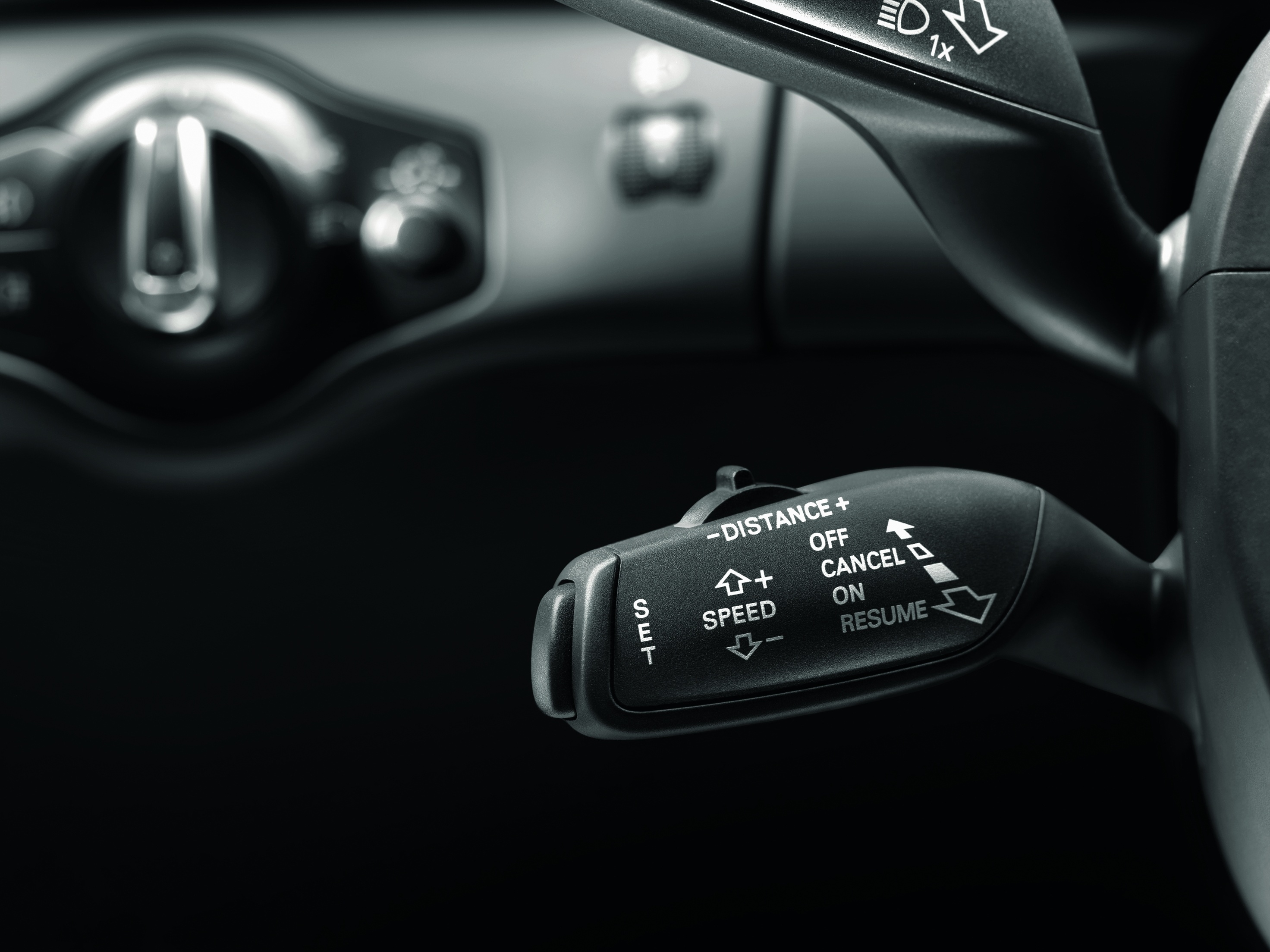
Among other things, this system helps by pretensioning the front safety belts and automatically adjusting the occupants' seats to a more optimal position. Press the cruise control ON/OFF button on the steering wheel to activate the feature. If your car has a Head-Up Display, or a cluster display, you’ll see a white ADAPTIVE CRUISE CONTROL icon when the system is turned on. An arc with a tiny triangle pointing through it or a speedometer with a car on top might be the icon.
If traffic slows to a stop, most ACC systems will bring the car to a complete stop, then bring it back up to speed when traffic gets going again. Others work only within certain speeds and/or might not start to accelerate automatically. The driver can use the touchscreen to steplessly swivel and zoom the image of the car and the actual vehicle surroundings. There is also a view of the front or rear tires so that the driver can pull the car up right next to the curb.


No comments:
Post a Comment